
A running session does not need to be exceptionally long for chest discomfort to appear. Heat, sweat and an unsuitable shirt can create nipple chafing even during an ordinary weekly run.
The good news is that prevention does not have to be complicated. A few practical changes to clothing, skin preparation and post-run care can make a noticeable difference.
Solution One: Change the Shirt
Begin with the item making direct contact with the chest. A loose, rough or sweat-heavy top can move across the nipple area thousands of times.
Choose a garment that is:
- Lightweight
- Moisture-wicking
- Smooth on the inside
- Close-fitting without being restrictive
- Free from rough chest seams
- Previously tested
Check decorative logos, labels and zips. These can create irritation even when the main fabric feels soft.
Solution Two: Keep the Contact Area Dry
Sweat makes clothing heavier and can leave irritating salt on the skin. Complete dryness is impossible during hard exercise, but sensible clothing can limit how long moisture remains trapped.
Change out of wet kit after finishing. During very long events, a dry spare top can be useful.
Avoid applying anti-chafe protection on top of existing sweat. Clean and dry skin allows more even coverage.
Solution Three: Apply a Barrier Early
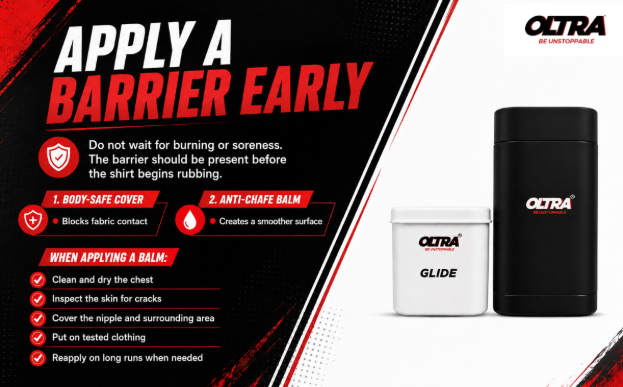
Do not wait for burning or soreness. The barrier should be present before the shirt begins rubbing.
A body-safe cover blocks fabric contact, while a balm creates a smoother surface. Both approaches can work when used correctly.
When applying a balm:
- Clean and dry the chest.
- Inspect the skin for cracks.
- Cover the nipple and surrounding area.
- Put on tested clothing.
- Reapply on long runs when needed.
A preventative cosmetic product should not be placed on open or infected skin unless its directions allow it.
Solution Four: Secure Hydration Equipment
A running vest can pull a shirt tightly across the chest. Bouncing can also create side-to-side fabric movement.
Load the vest with the amount of water and equipment expected during the actual run. Adjust every strap while moving rather than while standing still.
Drink from the pack and reassess the fit. As the water weight decreases, the vest may start moving differently.
Solution Five: Test Everything in Training
Nipple chafing while running often appears because the runner uses a new top, bra, vest or protection method during an important event.
Test one change at a time. This helps identify which adjustment solved the problem.
For example:
- First test a different shirt.
- Then add a balm.
- Next test the full hydration vest.
- Finally repeat the system in race-like weather.
Changing several items at once makes it difficult to know what worked.
Solution Six: Carry a Reapplication Option
A long run can outlast the first application of a friction barrier. Sweat, rain and clothing movement may gradually remove it.
Carry the product somewhere accessible. When tingling begins, stop in a private location and respond early.
Reapplication is particularly useful during:
- Marathon training
- Trail events
- Humid summer runs
- Wet-weather races
- Long cycling sessions
- Multi-hour hikes
A compact direct applicator can be more convenient than a large container.
Solution Seven: React to Early Discomfort
The first sign may be subtle warmth or sensitivity. Do not assume it will disappear.
Check whether the top has folded, a seam has moved or a strap is pressing on the area. Add protection or change the garment when possible.
If the skin has started bleeding, continuing may worsen the injury. Reducing or ending one session can be preferable to losing several future training days.
Solution Eight: Care for the Skin Gently
After a chafing episode, remove damp clothing and rinse away sweat and salt. Use mild soap and lukewarm water.
Pat the skin dry with a clean towel. Avoid rough fabric, scrubbing and fragranced products that cause stinging.
Wear a loose, breathable top while healing. Medical care is appropriate when redness spreads, pain increases, pus develops, swelling appears or the area does not improve. Persistent nipple symptoms unrelated to exercise require assessment.
Solution Nine: Keep a Running Log
A training diary can record more than pace and distance.
Add short notes about:
- Shirt used
- Weather
- Distance
- Hydration vest
- Anti-chafe protection
- Reapplication
- Skin condition afterwards
After several weeks, the runner may discover a clear threshold or specific clothing trigger.
Why Choose Oltra Glide?
Oltra creates natural, performance-led wellness products for exercise, travel, work and ordinary movement. Oltra Glide comes with a reusable direct applicator and replaceable 40g refill, making application straightforward and reducing the need to discard the whole container. Its formula is certified plant-based, made in Britain, vegan, cruelty-free, petroleum-free, paraben-free and aluminium-free.
People who experience chafing on nipples can apply Oltra Glide to intact skin before running. It can also be used on other common hotspots, including the inner thighs, underarms, feet and areas affected by clothing or equipment. Core provides an unscented option for runners who prefer it.
Keep the Solution Simple
Effective prevention comes from repeating a few reliable steps: wear tested clothing, apply protection before movement and act on early discomfort.
A simple routine is more valuable than a complicated plan used only occasionally. Make skin preparation part of getting dressed, and the run is more likely to remain comfortable from start to finish.